You're in the usual spot, scrolling at 11 p.m., trying to find a gift that won't look like you bought it five minutes before checkout. You don't want another mug, another generic candle, or another “World's Best Mom” item that ends up in a drawer. You want something that feels like you noticed her, not just the calendar.
Mother's Day has turned into a huge gifting moment, with the National Retail Federation estimating $38 billion in spending in 2026 and a per-person budget of $284. But the same data says the winning gifts still look personal and specific, with handwritten cards (50%), gift cards (48%), and flowers (40%) among the most wanted gifts, and 81% of moms saying they want something personal or thoughtful rather than generic (NRF Mother's Day data). That's the filter. A meaningful gift doesn't just cost money, it shows recognition.
Table of Contents
- What Makes a Mother's Day Gift Actually Meaningful
- Ask the Right Questions Before You Search
- Matching Gift Types to Memories and Values
- Personalization Ideas That Look Effortless
- Budget, Shipping, and Timing Without the Stress
- When Meaningful Doesn't Mean Sentimental
- Presentation, Timing, and the Morning Of
What Makes a Mother's Day Gift Actually Meaningful
You're standing in a store aisle or staring at a product grid, and the same thought keeps coming back, this needs to mean something. That feeling is useful, but it's too vague to shop with. A meaningful gift has to pass three checks before she even opens it.
The three checks
First, it needs a real memory anchor, a place, date, person, or identity cue that belongs to her life, not a generic label slapped on top. Second, it needs display fit, meaning she can see it in a place that matters, desk, shelf, hallway, bedside table, or kitchen wall. Third, it needs the right message restraint, enough emotion to feel personal, not so much text that it starts behaving like a card trying to be a poster.
Practical rule: if you can't explain the reference in one sentence, the gift is probably too vague.
That's why so many personalized gifts miss. They're customized, but not anchored. A design with a name on it is not automatically meaningful. A poster of “Mom” in decorative lettering is still generic if it doesn't point to a specific memory, role, or shared story. The best gifts feel like they were pulled from your actual relationship, not from a template.

What to do with those checks
Use the memory anchor to choose the idea, use display fit to choose the format, and use message restraint to decide what stays off the design. A gift that passes all three checks feels calm and confident. It doesn't beg for attention, it earns it.
Ask the Right Questions Before You Search
The wrong way to shop is opening a tab and hoping the perfect thing appears. The right way is asking a few pointed questions first. You can do this in fifteen minutes, and it saves you from buying a pretty object that doesn't fit her life.
Start with what she already signals
Ask yourself what she complains about, what she keeps mentioning, what she recently replaced, and what she frames, saves, or leaves out in plain sight. If she talks about a place she misses, that points toward a location-based gift. If she keeps saying she never prints photos, don't buy a photo-heavy piece and call it thoughtful.
If she says, “don't get me anything,” don't treat that as a ban. Treat it as a warning against fuss. That usually means she wants something light, useful, or low-pressure, not a grand emotional production.
Good gifts follow the recipient's habits, not the giver's fantasy.
Ask other people without spoiling the surprise
Siblings, partners, and adult kids often know different parts of the picture. Ask one simple question, “What does she use?” That gets you closer to a real answer than a brainstorm full of ideas no one has seen her respond to. If everyone gives you different signals, choose the one that shows up in her routine, not the one that sounds most flattering.
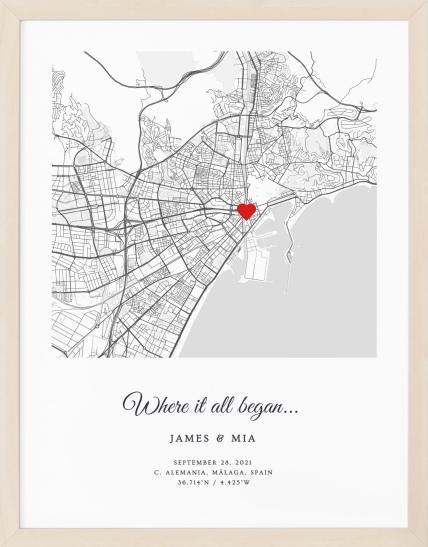
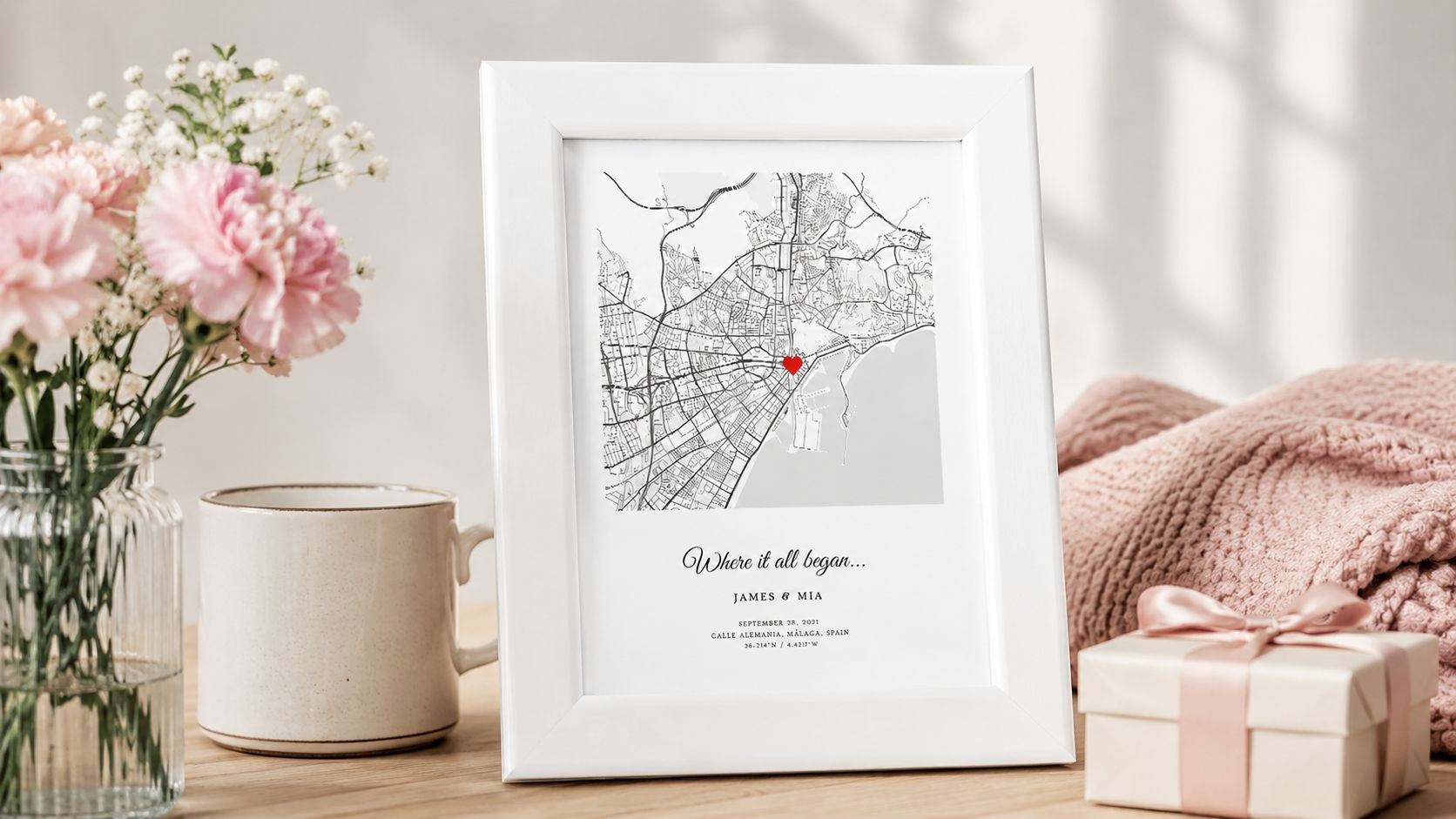
For a highly specific route, a Personalized where we met map can work when the relationship revolves around a place that still matters, but only if that location really carries shared history. The product itself is straightforward, a personalized map of the place where you first met. If that memory doesn't exist clearly, skip it. Don't force sentiment where the story isn't there.
Use the answers to narrow the lane
A mom who mentions her office, her reading chair, or a favorite shelf is signaling display context. A mom who keeps talking about a trip, a house, or a milestone is signaling memory. Once you know that, you're not browsing randomly anymore. You're matching a real cue to a real format.
Matching Gift Types to Memories and Values
Most meaningful Mother's Day gifts either get sharp or get mushy. The mistake is picking “personalized” as the category and stopping there. A much better move is choosing the memory type first, then matching the design to the kind of woman she is.
| Memory Anchor | Poster Type | Best For | Key Details to Get Right |
|---|---|---|---|
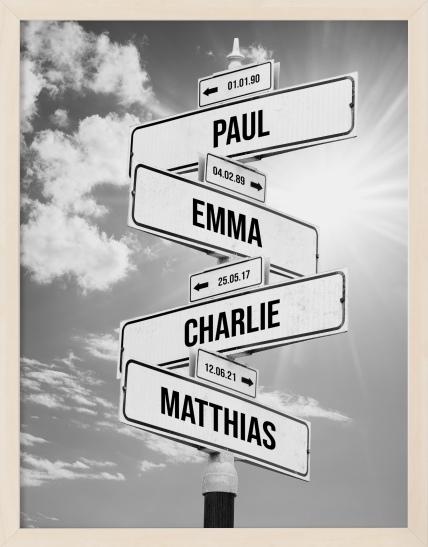
| Place | Where we met map, city map, street sign style print | Moms who value milestones tied to a home, neighborhood, trip, or origin story | Exact place name, spelling, layout balance, and whether the location feels emotionally specific |
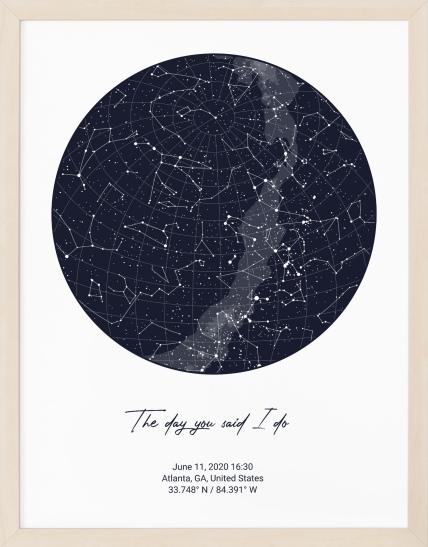
| Moment | Star map, moon phase, birth poster | Moms who care about a date that changed the family story | The correct date, place, and whether the event calls for a visual or text-light treatment |
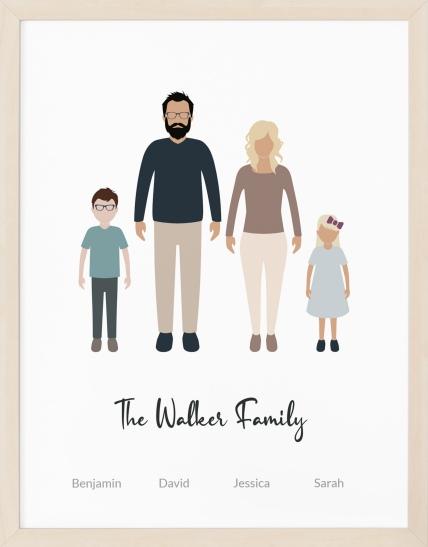
| People | Illustrated family portrait, cartoon portrait from photos | Moms who want the family itself front and center | Photo quality, number of people, and whether the style fits her decor |
| Identity | Definition poster, astrology poster | Moms who enjoy language, humor, or symbolic self-expression | The wording, tone, and how much personality the typography carries |
Choose the anchor that matches her personality
A place-based gift fits the mom who lights up when she talks about a home base, a first apartment, or a favorite city. A moment-based design fits someone who treats anniversaries, birth dates, or moon phases as markers of family history. A people-based piece suits the mom who wants the family in the frame. An identity-based design works best when she likes the idea of being seen for her traits, sense of humor, or sign.
The best personalized gift doesn't say everything. It points to one thing that matters most.
That's why poster with stars works only when the date is the point, not when you're trying to cram in every memory you've ever had. The star map idea is strong because it makes one night visible. If you dilute it with too much text, you lose the whole effect.
Match the format to the room
Big emotional gestures do not belong in tiny spaces. A family portrait can hold a hallway or living room wall. A city map or star map can sit well in a bedroom, office, or entryway if the design stays clean. If the room is busy, the poster should be quieter. If the room is minimal, the design can carry a little more visual weight.
Personalization Ideas That Look Effortless
The easiest way to ruin a custom gift is by treating every inch of the design like a place to prove how hard you worked. You don't need to prove effort. You need the final print to look calm, intentional, and easy to live with. That's what makes it feel expensive in the emotional sense, even when the material itself is simple.
A clean build beats a cluttered one
Say someone is building a star map for the night a child was born. The first thing she should lock in is the date, then the place, then the layout. If the poster already has a strong visual anchor, like the night sky, keep the rest of the text short. A name, a date, and one line of message is usually enough.
The same logic applies to a family portrait. If the illustration already captures the people, the caption should stay small and restrained. A line like “Home is wherever we're together” works because it reinforces the image instead of competing with it. Too many adjectives just make the print look nervous.
Keep the message from doing too much
A gift can be heartfelt without reading like a greeting card that got stretched onto a wall. That matters even more for practical, visually sensitive homes. If you need a reference point for practical gifting that still feels thoughtful, find unique plant gifts is a useful example of how utility and personality can coexist without sentiment overload.
If you're making a poster-style gift for a child from a parent, the internal line between message and image matters a lot. A design built from a birthday memory should live on the visual side of the line, not become a paragraph. The birthday gifts for mom from kids category shows the same principle clearly, the message should support the piece, not take it over.
Edit like someone who's been in the room
Spell the place name correctly. Check the date twice. Make sure coordinates, if used, are accurate. Then stop editing. Overpersonalization is a real problem. A gift can become less usable when it's crowded, too literal, or visually mismatched to the home. If she'd never hang a busy sign in her living room, don't design one and hope the sentiment saves it.
Budget, Shipping, and Timing Without the Stress
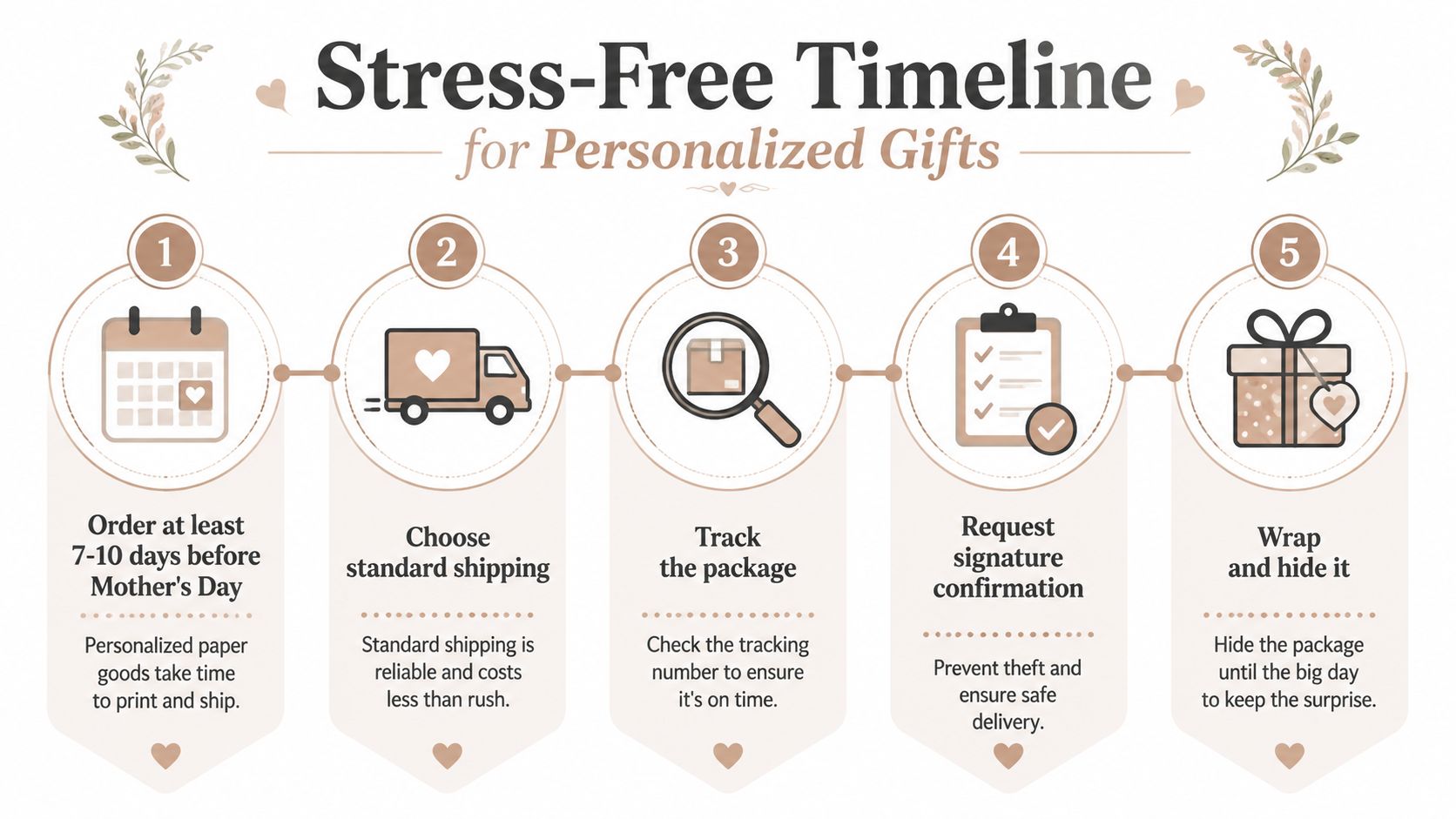
A meaningful gift that lands late is just a missed chance with a nice backstory. Timing is not a side issue, it's part of the gift. Personalized paper goods tend to reward planning because the thought is in the design, while the physical object itself stays relatively straightforward.
Budget for the whole process, not just the print
The cheapest part of a custom gift is often the print itself. The main cost lives in production decisions, shipping speed, and whether you leave yourself enough time to fix a bad proof. If you're deciding between a rushed shipment and a calmer one, choose the calmer one. Rushed shipping is what turns good intentions into stress.
Revellia's model is a useful reference point here because it fulfills orders through 100+ local print partners in 30+ countries, with typical delivery windows of 3 to 7 business days and an average 3,445 km saved per order through local production (Revellia). That kind of setup matters because it reduces the distance the order has to travel and gives you a tighter delivery window to work with.
Back-plan instead of hoping
Order by the day before the cutoff window, not on the cutoff window. That gives you a buffer for proofing, address issues, and tracking delays. If you're using a vendor with live previews and order tracking, good. Still don't cut it close. Track the package, keep the confirmation email, and give yourself a fallback if the courier stalls.
Simple rule: if you're already nervous about delivery, you're too late.
If a vendor can't explain its production window clearly, move on. Meaningful gifts are supposed to feel thoughtful, not fragile.
When Meaningful Doesn't Mean Sentimental
A lot of gift guides treat meaningful and sentimental as the same thing. They aren't. Some moms want the tear-jerker. Many do not. Some relationships call for a keepsake. Others call for relief, ease, or a clear gesture that says, “I know what matters to you.”
Mother's Day spending already shows that people buy more than objects. NRF reported broad planned spending around the holiday, with much of it going toward jewelry, outings, flowers, and gift cards, which is a useful clue that meaning often lives in a plan, a break, or a shared moment (NRF spending release). The same holiday data shows many moms want to go out to eat, receive gifts, or enjoy an experience, and a sizable share are still coordinating their own plans (NRF Mother's Day data). That points to a simple truth. The right gift is often about fit, not sentiment.
Pick the right kind of meaning
If she loves keepsakes, choose the print. If she loves being taken out, choose the experience. If she is overwhelmed, practical support can be the most respectful gift in the room. Cleaning help, meal delivery, or a quiet morning without obligations can carry more emotional weight than another framed object she has to hang.
Cause-based gifts can also work, but only if they are concrete. A vague “we donated in your name” note usually feels thin. A better choice is something she can see, explain, or tie back to a value she already lives by. If sustainability matters to her, a gift with a lower-waste footprint or a thoughtful second life makes more sense than another item headed for a drawer. A practical roundup like eco-friendly gift ideas gives you a cleaner place to start if that's the lane you want.
Use sentiment only where it fits
A mother who likes rituals may value a planned brunch or a recurring outing more than a handwritten declaration. A mom who is hard to shop for may prefer something functional because it respects her taste instead of trying to overwrite it. A mom going through a tender season may want distance from heavy sentiment and appreciate a gift that makes life easier.
That is the part a lot of guides miss. Meaning is not one style. It is the match between the gift, the relationship, and the moment. Get that right, and the gift feels considered instead of performative.
Presentation, Timing, and the Morning Of
A strong gift can still fall flat if the presentation is sloppy. Don't hand over a flat print in a crumpled bag at the last second and call it done. Put a little discipline into the reveal and the whole thing lands better.

Keep the reveal clean
Time delivery for the day before, not the morning of. Wrap flat prints in a tube or protective sleeve so they open neatly. Add a handwritten note that says what the gift connects to, not a speech. One sentence is enough if it's specific.
Present it at breakfast if that fits your family rhythm. If not, give it during a quiet moment when she can absorb it. The biggest mistake on Mother's Day is acting rushed while trying to be heartfelt. That combination makes even a good gift feel improvised.
Don't lose the point in the final hour
Have a backup plan if shipping goes sideways. A digital preview or printed note can save the day if a parcel gets stuck. And if you're doing the morning yourself, don't stack too many things into it. A rushed card, a missed reservation, and last-minute flowers can make the day feel like a cleanup operation instead of a gesture.
The one thing to avoid is trying to make the morning perform harder than the gift itself. Let the gift carry the memory. Let the note carry the feeling. Let your timing show that you planned ahead.
If you want a gift that feels personal without becoming cluttered, Revellia makes personalized posters and prints around the memory, moment, or place you choose, then produces them through local print partners for faster delivery. Visit Revellia to build a Mother's Day print that matches the story you want to tell.