You're probably here because a generic gift feels wrong.
Maybe you've scrolled past watches, candles, and photo frames, hoping something would feel personal enough for a wedding, an anniversary, a new baby, or the night your life changed. A poster with stars often lands where other gifts miss. It feels intimate, visual, and lasting. It turns a date and place into something you can hang on a wall and revisit every day.
That's what makes it different from ordinary decor. It isn't only about what looks pretty in a frame. It's about choosing a moment first, then shaping the art around that memory so the finished piece still feels meaningful years later.
Table of Contents
- Beyond a Gift, A Moment Captured in the Stars
- Decoding the Cosmos Types of Star-Themed Posters
- Making It Yours The Art of Personalization
- From Wall Art to Statement Piece Styling Your Poster
- The Difference Quality Makes Archival Prints That Last
- How to Create Your Perfect Poster With Stars
Beyond a Gift, A Moment Captured in the Stars
A former student once told me she wanted a wedding gift for her sister that “didn't feel like it came from a last-minute search.” She didn't want another registry item. She wanted something that said, this day mattered.
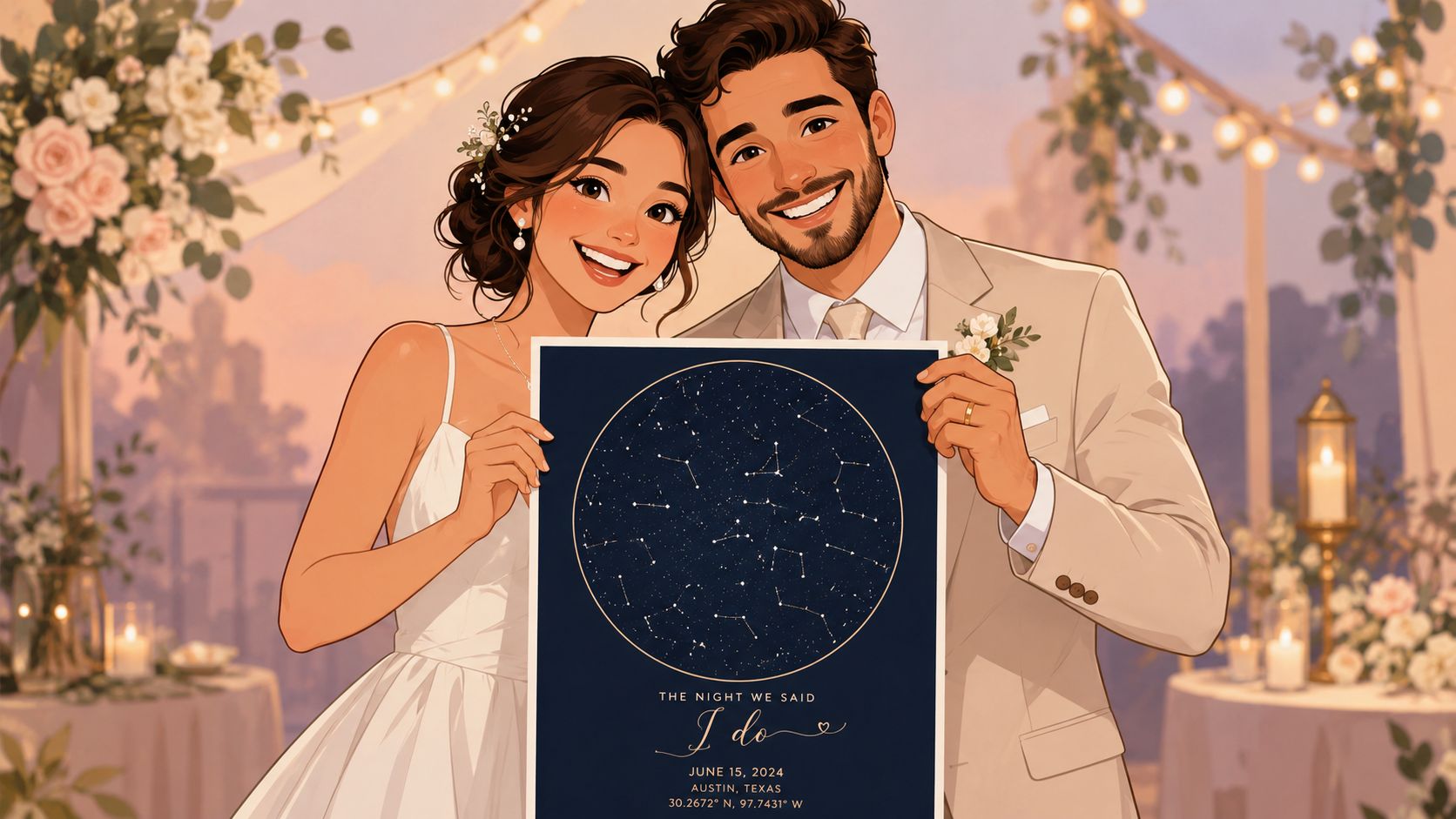
She chose a star-themed poster tied to the couple's wedding date and location. What made it work wasn't only the sky design. It was the message at the bottom. Their names, the city, and a short line from the vows. The print became less about astronomy and more about memory made visible.
That's why this kind of art connects so strongly. A poster with stars can mark the night two people met, a child's birth, a proposal, or even a quiet personal milestone that no one else fully sees. The wall piece becomes a reminder of meaning, not just decoration.
Practical rule: Start by naming the memory in one sentence. If you can say clearly what the poster is honoring, the design choices get much easier.
Some people want a sky chart linked to a date and place. Others prefer moon phases, zodiac-inspired artwork, or a softer celestial design that suggests wonder without trying to map the sky exactly. All of those can be beautiful. The key is choosing the format that matches your intent.
If your goal is romance, you may want something precise and minimal. If your goal is nursery art, softness and readability usually matter more. If the poster is for your own home, it should carry emotional weight and still sit comfortably inside your space.
That balance matters. A meaningful piece should feel personal first, but it also has to work as a physical object you'll live with. Size, paper, finish, and framing all shape whether the final result feels like a keepsake or an afterthought.
Decoding the Cosmos Types of Star-Themed Posters
People often use “star poster” to mean several different things. That's where confusion starts.
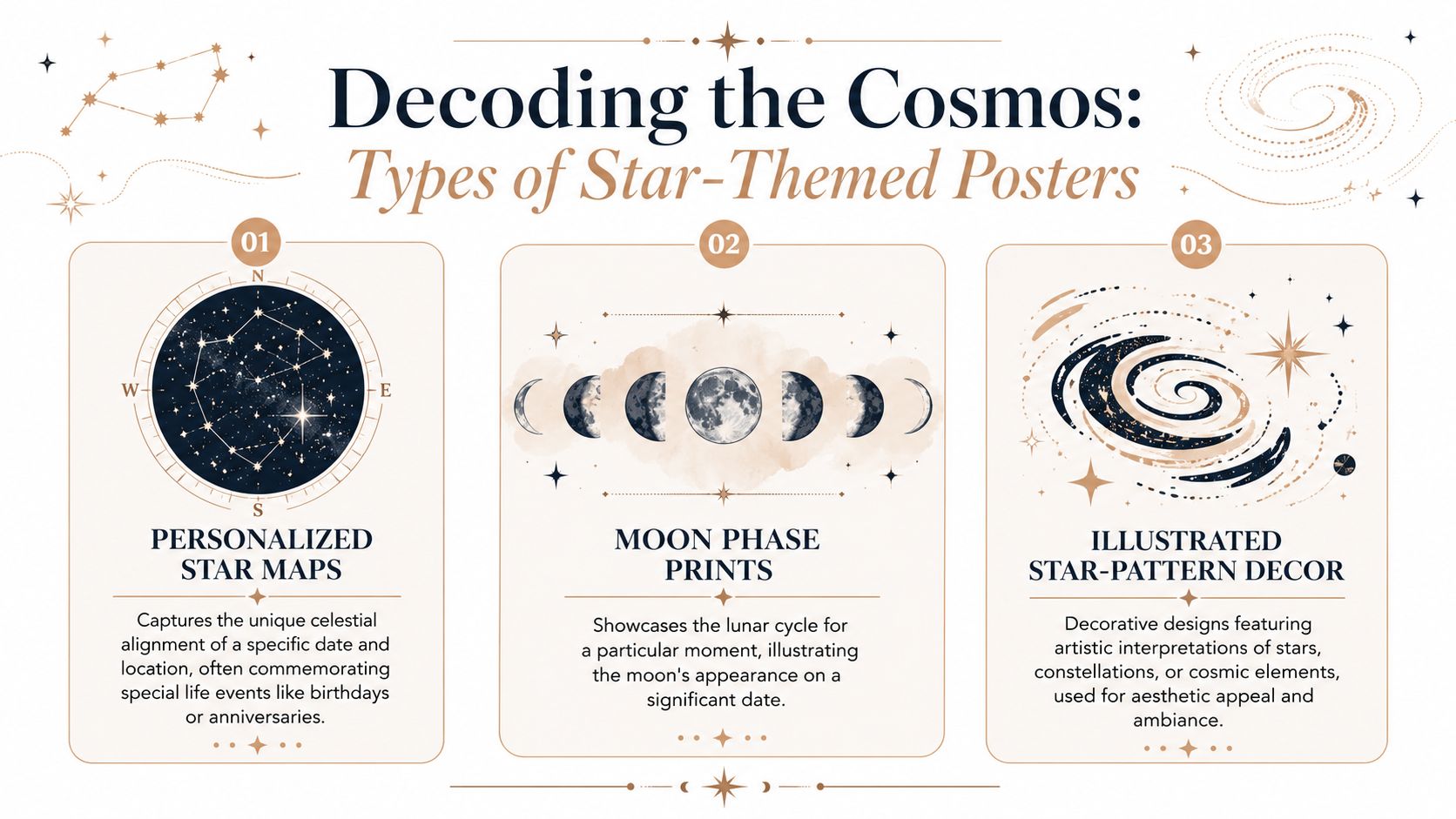
Some posters are based on the sky at a specific moment. Some focus on the moon. Others use stars as a decorative language rather than a mapped event. If you know the difference early, you'll make a better choice and avoid disappointment later.
Three formats people often mix together
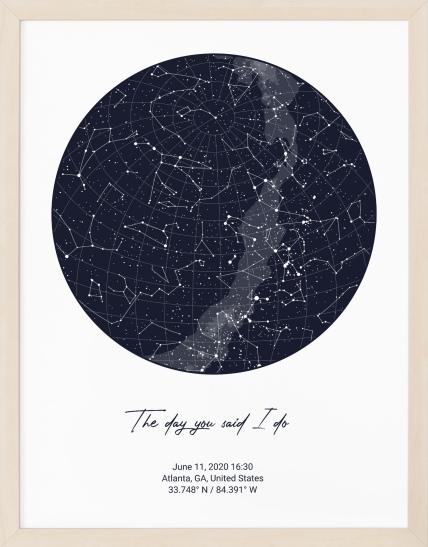
Personalized star maps are tied to a date and location. They're usually chosen for anniversaries, weddings, births, or first meetings. A Personalized star map is one example of a star map poster recreating the night sky for a special moment.
Moon phase prints show the lunar phase connected to a meaningful date. They often feel calmer and cleaner than dense star charts, which makes them a good fit for bedrooms, nurseries, and gifts where the symbolism matters more than a detailed sky field.
Illustrated star-pattern decor uses celestial imagery in a looser way. Think stylized constellations, repeating stars, cosmic line art, or astrology-inspired layouts. These work well when your main goal is mood, not event accuracy.
One important expectation check belongs here. A 2024 industry study on commercial star map accuracy reported that 35% of consumers understand that commercial star maps prioritize aesthetic alignment over optical precision for real-time observation, while 68% of buyers try to use their poster to locate stars in the sky. That gap explains why some people love their print as art but feel confused when they compare it with what they can see outdoors.
A commemorative sky print is usually meant to honor a moment. It isn't the same thing as a live stargazing guide.
Which one fits your reason for buying
Here's a quick comparison that helps in the early decision stage.
| Poster Type | What It Shows | Best For | Personalization Level |
|---|---|---|---|
| Personalized Star Maps | A sky layout tied to a date and location | Weddings, anniversaries, births, first meetings | High |
| Moon Phase Prints | The moon's appearance for a meaningful moment | Birthdays, nursery gifts, quiet personal milestones | Medium to high |
| Illustrated Star-Pattern Decor | Artistic celestial motifs and stylized cosmic elements | General decor, astrology-inspired rooms, softer gifting | Low to medium |
If you want the poster to say, “This exact night changed my life,” a star map usually fits best. If you want something gentler and more symbolic, moon phases often feel more elegant. If you're decorating a room and want a celestial mood without tying it to one date, illustrated designs make more sense.
A lot of buyers get stuck because they're choosing with their eyes only. It helps to choose with your story first. Ask one simple question: do I want to remember a specific moment, or do I want to create a feeling?
Making It Yours The Art of Personalization
The emotional difference between a nice print and a keepsake usually comes down to personalization.
A common starting point is colors or layout. I'd start somewhere else. Begin with the meaning you want the poster to hold, then use the design controls to support that meaning.
Start with the moment, not the style
Pick the date first. That could be a wedding, a birth, a proposal, a first kiss, or the night you moved into a first home together. Precision matters because the chosen date gives the piece its emotional anchor.
Next comes the location. A city name may be enough for some gifts. For others, the exact place matters because it changes the story. “Paris” and “the street outside the café where we met” create very different feelings, even if the visual result looks similar at a glance.
Then consider the visual tone:
- Minimal layouts feel calm and modern. They suit couples, neutral interiors, and formal gifts.
- Dark-background designs feel dramatic and intimate. They often work well in bedrooms or spaces with moodier styling.
- Soft neutrals feel warm and easy to live with. They're useful when the recipient already has a light, natural interior.
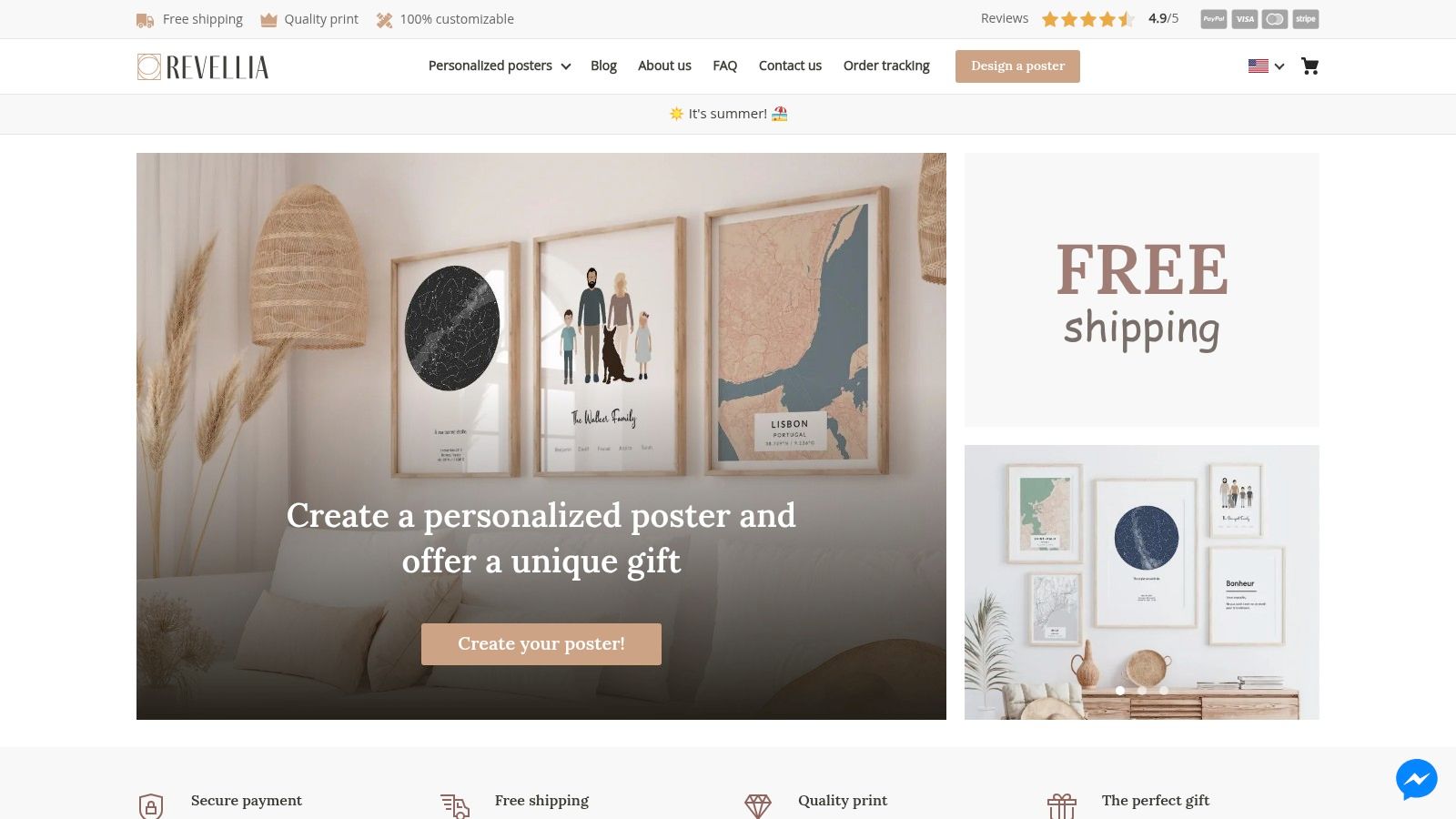
A live editor helps here because it turns abstract choices into visible ones. Revellia offers an in-browser editor with live previews and controls for text, date, and style, which makes it easier to see how a personal memory translates into a finished layout without guessing.
Add words that carry the memory
The text at the bottom often does more emotional work than the stars themselves.
You don't need much. In fact, shorter usually feels stronger. Good options include:
- Names and date for a clean, classic look
- A place name when location is central to the story
- A short phrase such as “The night we met” or “Welcome to the world”
- Coordinates or a meaningful line if you want a more private, layered reference
The best custom text sounds like the person, not the product. If the wording feels generic, shorten it until it feels real again.
Typography matters too. Serif fonts often feel timeless and ceremonial. Sans serif styles feel modern and understated. Script can be lovely in small doses, but too much can make a detailed sky print harder to read.
If you're unsure, use this test. Cover the stars with your hand and read only the text. If the wording still stirs something, you're on the right track.
From Wall Art to Statement Piece Styling Your Poster
A beautiful design can still disappear in a room if the physical styling is off.
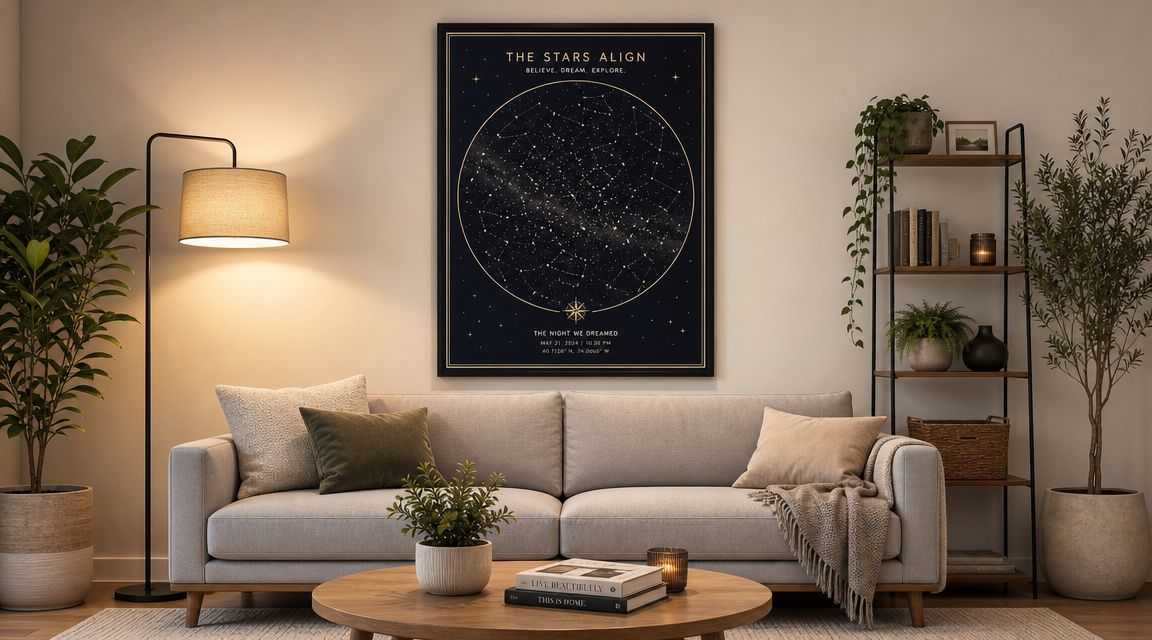
People usually spend more time choosing the sky than choosing where it will live. That's backwards. A poster with stars becomes more powerful when its size, frame, and placement make it feel intentional in the room.
Match the scale to the room
Think about viewing distance first. A small print can feel intimate on a desk, bedside table, or narrow wall section. A larger piece works better over a sofa, bed, or entry console where the design needs to hold visual weight.
Print quality matters more as size increases. The University of Utah poster printing guidance notes that files for dense graphic posters like celestial star maps should be at least 300 DPI at final print size so individual stars, fine lines, and labels stay crisp rather than pixelated. That becomes especially important when you choose a larger format.
If you're planning a bold focal point, don't upscale a weak file and hope for the best. Fine celestial detail exposes low resolution quickly.
Frame and finish change the feeling
Frames aren't an afterthought. They set the emotional temperature.
- Black frames create contrast and make dark skies feel sharper.
- Natural wood softens the look and works well in Scandinavian, earthy, or family-centered interiors.
- White frames keep the piece airy and let soft palettes blend into light walls.
Placement matters just as much. A single framed print above a bed can feel intimate and private. On a gallery wall, the same print becomes part of a larger story. It pairs especially well with wedding photos, travel images, or place-based art.
Don't style celestial art like filler. Give it enough visual space that people can step closer and read the memory.
If the design has detailed labels or a dense star field, avoid glare-heavy placement near strong windows or direct overhead reflection. Celestial prints reward lingering attention. You want viewers to see both the image and the words without fighting light.
The Difference Quality Makes Archival Prints That Last
A star poster often marks a life event. That makes print quality part of the meaning.
If the paper warps, the surface reflects too much light, or the detail softens after a short time, the object stops feeling worthy of the memory it represents. That's why archival-quality materials matter more here than they might for trend-based wall art.
Why matte paper works so well for celestial art
The archival matte paper guidance from Poster Print Shop describes museum-quality matte posters as using heavy-weight paper with a minimum of 230 gsm and a non-reflective coating that diffuses ambient light. For star maps and other detail-rich designs, that matters because a matte surface keeps small text and fine points easier to read under bright lighting.
That finish also changes the emotional feel of the piece. Glossy posters often read as louder and more decorative. Matte surfaces feel calmer, more tactile, and more suited to personal art that you want people to spend time with.
A good celestial print benefits from three things at once:
- Weight so the sheet hangs cleanly and feels substantial
- Low glare so details stay visible
- Clean contrast so stars, labels, and captions don't blur together visually
Why DIY often falls short in the final print
Many people can design a beautiful poster on screen. The harder part is producing it well.
Home and casual print setups often struggle with the exact things celestial art needs most: smooth dark areas, crisp point detail, stable paper, and a finish that doesn't throw reflections across the image. That's why a professionally produced print often feels so different from a promising digital mockup.
If the piece is meant to become part of a home for years, material quality isn't a luxury detail. It's part of whether the poster continues to feel like art rather than a temporary printout.
How to Create Your Perfect Poster With Stars
The best starting point is a life moment, not a template.
A wedding anniversary might call for the night sky from the ceremony. A best friend's birthday might feel better as a moon phase print with a short personal line. New parents often love celestial art that marks a birth in a way that feels poetic without becoming overly busy.
Gift ideas by life moment
Some combinations work especially well because the format matches the feeling.
- Anniversary gift. Choose a star map tied to the wedding date, first date, or proposal night.
- Birth gift. Use a moon or sky design with the baby's name, birth date, and place.
- Friendship gift. Pick a cleaner celestial style with an inside-joke caption or shared location.
- Personal milestone. Mark a graduation, move, recovery, or turning point with a poster that feels private and grounding.
The practical side matters too. If you're ordering a physical print as a gift, it helps to understand packaging choices before it ships. This guide to shipping posters tubes versus flat gives useful context on how different shipping methods affect presentation and handling.
A simple creation flow
Start with the memory. Then move through the build in this order:
- Choose the date and location. That gives the poster its emotional core.
- Pick the format. Go with a star map, moon phase, or illustrated celestial design depending on your intent.
- Refine the text. Keep it short enough to feel natural when framed.
- Match the palette to the room. Warm neutrals, dark dramatic tones, or something soft for a nursery all change the mood.
- Think about longevity. A 2025 YouTube discussion of the DIY star map trend states that 79% of DIY users lack access to professional-grade archival inks or museum-quality matte paper, and that those prints may degrade within 6–12 months, while on-demand commercial prints can retain integrity for 5+ years.
If you want to see the creation process in a more visual way, this walkthrough is helpful:
What makes a poster with stars memorable isn't just the sky. It's the chain of decisions behind it. Why this moment. Why this wording. Why this size on this wall in this home. When those choices line up, the finished piece feels less like a purchase and more like a chapter of your story made visible.
If you're ready to turn a date, place, or memory into wall art, Revellia lets you design personalized posters in-browser and order them as finished prints on museum-quality matte paper.